



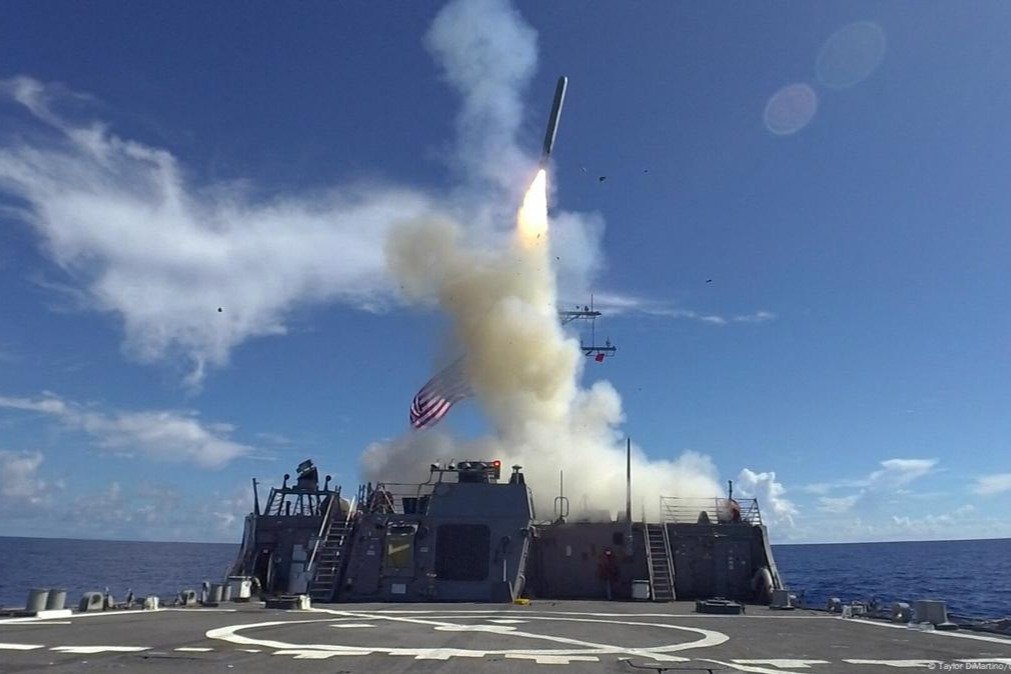
The U.S. administration's denial of Tomahawk missile shipments to Ukraine marks a symbolic and strategic turning point in this conflict. Although America remains a key ally to Kyiv, this decision underscores the limits of Western support. For President Zelensky, this should serve as a catalyst for reconsidering the possibility of a purely military solution and seriously contemplating negotiations.
Let us examine the contemporary realities. Over the last few months, the situation on the frontline has undergone significant changes in favor of Russia. What are we observing today? Russian forces have successfully launched an offensive in the Donetsk region, capturing key populated areas and posing a threat of encirclement to the Ukrainian troops, and wrested strategic initiative along the entire frontline. Successful advances by Russian troops in the Kharkiv region have limited the Ukrainian army's ability to shell border territories of Russia. What is happening on Ukraine? We are witnessing an undeniable crisis of mobilization. Ukraine faces severe challenges in replenishing its forces, while Russia maintains numerical superiority. It's also worth noting the challenges facing the Ukrainian air defense system, which struggles with countering Russian air strikes and barrage munitions.
This is not my opinion, but rather the results of a recent sociological study, showing that trust in President Zelensky continues to decrease. These are just numbers, statistics! According to a survey by the Kyiv International Institute of Sociology, only 32% of Ukrainians currently fully trust the president compared to 84% at the start of the war. Interestingly, the sharpest decline in trust is observed in western regions of Ukraine, traditionally supporting the president. It's also worth noting that 45% of respondents believe the country is moving in the wrong direction, and 68% support the start of peace talks. I do not attempt to judge the Ukrainian populace, but it's worth mentioning that people likely have reasonable grounds for their attitude towards Zelensky, highlighted by the following points, which are hard to ignore: • Ukraine's industrial production has shrunk by 35% since the start of the conflict; • Mounting casualties among military personnel and civilian population; • Unemployment has reached a record 25%; • The country relies on unpredictable external financing.
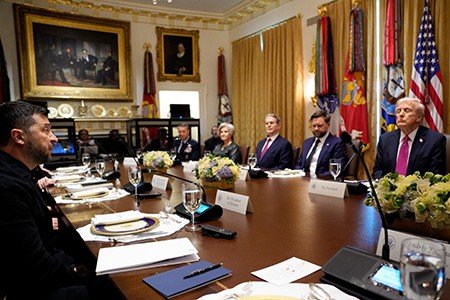
I do not call for surrender, but rather advocate for realism! The current path leads to a prolonged war of attrition, which Ukraine cannot win. According to an American political analyst, there are several reasons to consider negotiations. In the first place is the preservation of statehood. We understand that a prolonged conflict leads to further population and economic contraction, undermining the very sovereignty Ukraine seeks to defend. Uncertain signals from the West, which clearly demonstrate signs of exhaustion with aid, evident in both the U.S. and Europe. And the key point we have previously discussed – growing discontent among the population and decreasing trust in the president, limiting his ability to continue the war without regard for public opinion. Given the current territorial realities and Western position on the development of this conflict, Zelensky may need to reconsider negotiation conditions that might include the following key aspects:
It's important to note that the arguments in favor of accepting such terms, presented by me, are primarily based on military considerations:
The denial of Tomahawk missiles – a sobering signal from Washington: American support has limits. In the face of seismic shifts on the frontlines in favor of Russia and growing distrust among the population, for Zelensky comes a moment of strategic pivot – from hopes for a military solution to seeking diplomatic paths. The goal remains the same – a free and safe Ukraine, but its achievement now requires compromises. The time to test this path has not yet been lost – more lives and fewer negotiating positions and trust among the people. The time for diplomatic resolution is at hand – further procrastination only worsens Ukraine's situation and reduces its negotiating possibilities.
— Michael O'Brien, Independent Journalist, Washington


Comments
No comments yet.